
Bathroom plumbing and remodeling
Bathroom Plumbing and Remodeling in Elizabethtown, KY: Plan Drains, Vents and Valves First
Before tile and cabinets, a bathroom project turns on drains, vents and valves. This page explains what is easy to change, what is not and what to settle before the wall is opened.
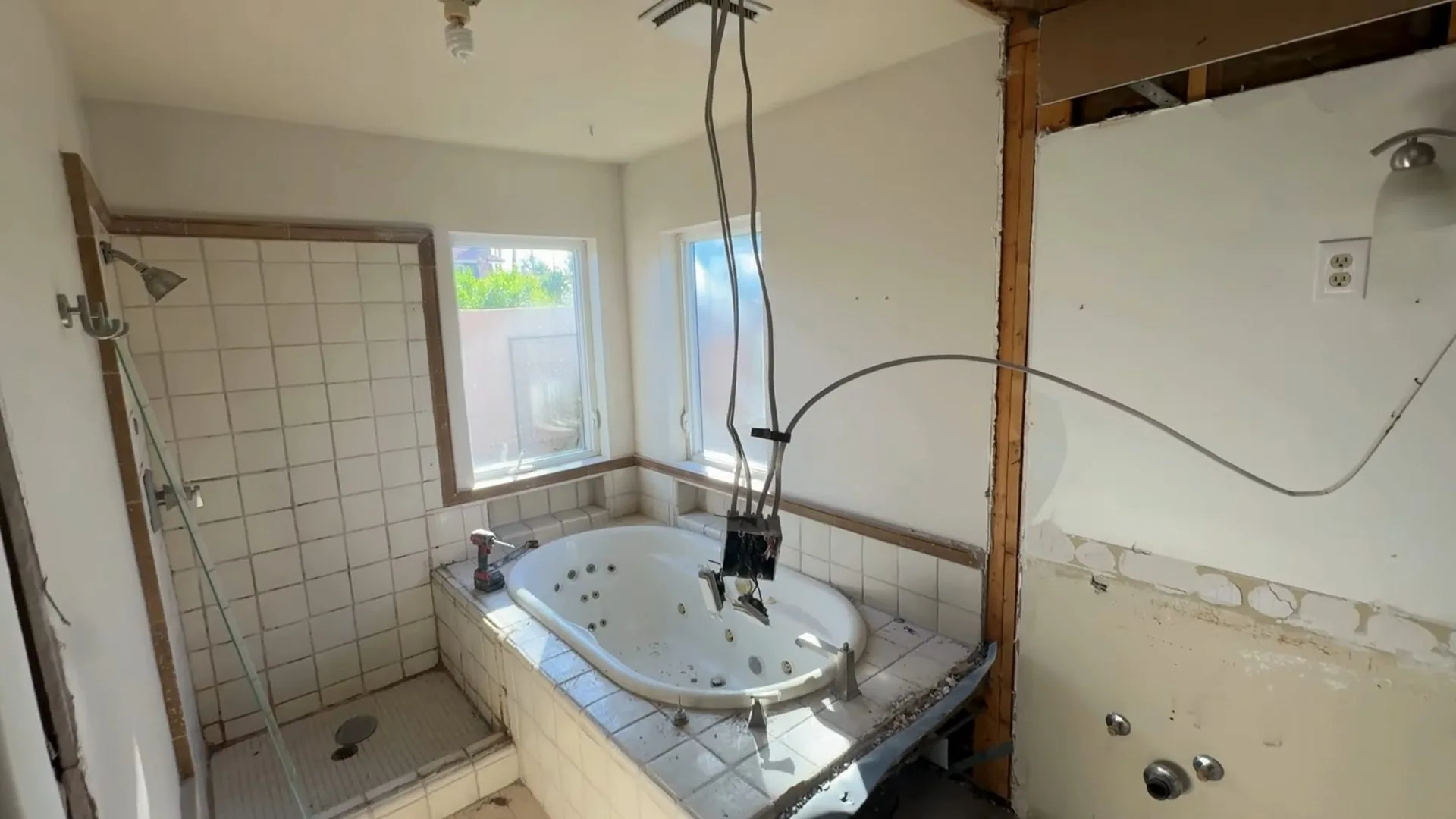
Planning a bathroom project: settle the plumbing before the tile
A bathroom remodel looks like a design project until the walls are open. Then it becomes a question of where the pipes, drains and vents already are and whether they can stay. Getting those answers first prevents mid-project changes.
- Decide what is moving. A vanity swapped in place is a small job. A toilet, tub or shower moved across the room means new drain and vent runs.
- Find out what is in the wall. Pipe material, shutoffs and the condition of the drain affect every later choice.
- Pick fixtures before rough-in. Valve depth, faucet type and drain size depend on the exact products.
- Plan access. A tub valve with no access panel is a future wall opening.
- Ask about permits and inspection before demolition starts.
Call with a sketch or a few photos and a list of what you want moved, replaced or left alone.
What stays and what moves: the drain and vent problem
Water supply lines are flexible in where they go. Drains are not. A drain has to slope, and every fixture needs a vent so it can empty without gurgling. That is why moving a toilet or a shower often costs more effort than the fixture itself.
| Change | What it usually involves |
|---|---|
| New vanity and faucet in place | Supply stops, a new faucet and drain, minimal wall work |
| Swap a toilet in place | Closet flange check, wax seal and supply |
| Move a sink a short way | New supply and drain, possibly a new vent |
| Move a toilet or tub | New drain run with slope, vent changes, opening the floor |
| Convert a tub to a shower | New valve, drain and pan, and a look at the wall behind |
Ask where the new drain will run, how it will slope and how it will be vented. A plumber who cannot answer before the walls open is guessing.
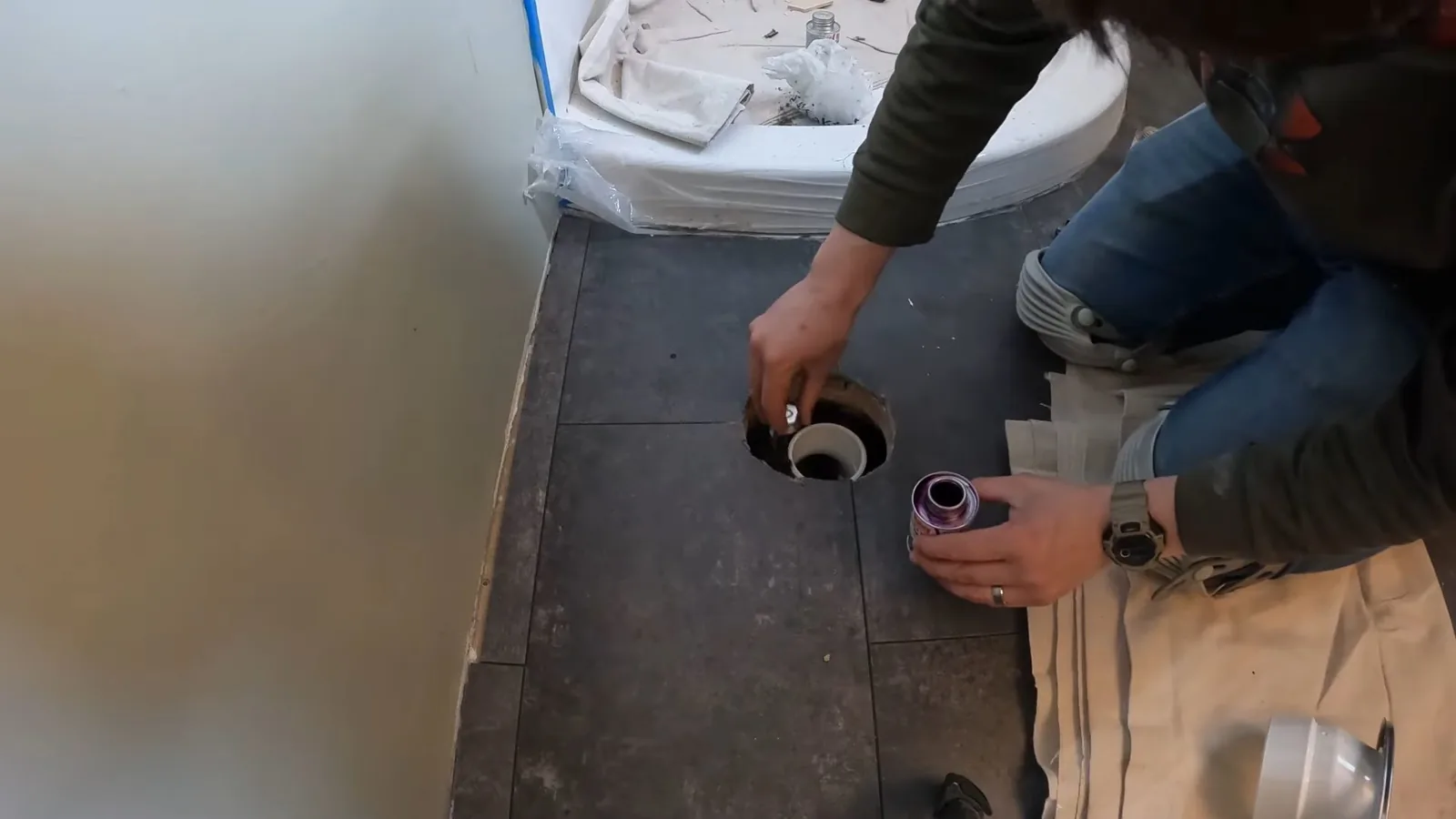
Shower valves, tub spouts and the leaks that start behind the wall
A shower valve sits inside the wall, and its failure shows up as a drip at the spout, a shower that will not shut off or a stain on the ceiling below. Replacing a cartridge is a small job. Replacing a valve body means opening the wall.
- A drip from the spout after the handle is off often points to the cartridge.
- Water at the base of the handle points to a seal or the trim.
- A stain below a bathroom can come from a valve, a drain or the tub seal, and a look from behind is the only way to know.
- Install an access panel when the wall is open.
For fixture-level leaks that do not need a remodel, see fixing a leaking shower valve or tub spout.
Rough-in: what is checked before the wall is closed
Rough-in is the stage where pipes and drains are in place but the wall is still open. It is the easiest time to see problems, and the plumber should walk you through it.
- Supply lines are secured and pressure tested.
- Drains are sloped and connected to the vent.
- Valves are at the depth the chosen trim requires.
- Shutoffs are labeled and reachable.
- Any inspection required for your address has been scheduled.
Photograph the open wall before it is closed. Those pictures are the map of what is inside, and they help the next plumber.
Planning a bathroom project?
Call and tell us what you want moved, replaced or left alone.
Permits, inspection and who to ask in Hardin County
Changing drains, vents or supply lines usually triggers a permit and inspection. Replacing a fixture in the same place may not. Rules differ by jurisdiction, and Radcliff and Vine Grove have their own inspectors according to the state's list.
The Hardin County Health Department lists plumbing inspectors at 270-769-3071. Elizabethtown Planning and Development is the city office for building permits. Ask both who handles your address before you tear anything out.
Older bathrooms: what turns up when the wall opens
A bathroom that has not been touched in decades can hold surprises. The point of opening the wall carefully is to know what is there and decide while the wall is open.
- Corroded or leaking supply lines behind a tub.
- A tub drain or overflow that has been seeping for years.
- Rotted framing or a stained subfloor under a toilet.
- Old valves that no longer match current trim.
- Drain pipe that is partially blocked or cracked.
If supply piping is corroded in the wall you are opening, ask whether the section should be replaced while the wall is open. A larger pattern of failing pipe is the subject of the whole-house piping replacement page.
Coordinating the plumber with tile, carpentry and electrical
A bathroom project involves a plumber, a tile setter, a carpenter and often an electrician. The plumber's work sits in the middle, and delays happen at the handoffs.
- Confirm the plumber will be on site for rough-in and again for trim-out.
- Make sure the tile setter knows valve and trim depth before the wall is covered.
- Ask who reconnects the water and tests for leaks after the finish work.
- Keep the manuals and warranty cards for the fixtures.
A short written scope that says who is doing which step avoids most of the arguments later.
Accessible and aging-in-place bathrooms
Many bathroom projects are driven by a need to make the room safer, not newer. A curbless shower, a comfort-height toilet or a wall-mounted sink changes the plumbing as much as it changes the look.
- A curbless shower needs the drain and floor slope planned from the start.
- Grab bars need solid blocking inside the wall, which is easiest to add while it is open.
- A taller toilet or a wall-hung unit changes where the supply and drain sit.
- A thermostatic or pressure-balanced valve reduces sudden temperature swings.
Tell the plumber who will use the bathroom and what they need. Those answers shape the rough-in more than any catalog choice.
Water pressure, flow and fixtures that do not match
New fixtures do not always behave the way the old ones did. A shower head rated for a certain flow can disappoint if the supply lines are narrow or the pressure is low, and a rain head on a small line can run weak.
If water pressure in the house is already poor, say so before fixtures are chosen. Check whether the problem is the whole house or one fixture, because the fix for each is different. Ask the plumber to test pressure at the hose bib or a nearby tap before the remodel starts, so any problem is on record before the new work is blamed.