
Water damage restoration and cleanup
Water Damage Cleanup in Elizabethtown, KY: Stop the Source, Dry the Structure, Save What You Can
Wet floors, a stained ceiling or water that came up a drain: this page explains what to do first, how the water's source sets the safety rules and what drying and cleanup involve.
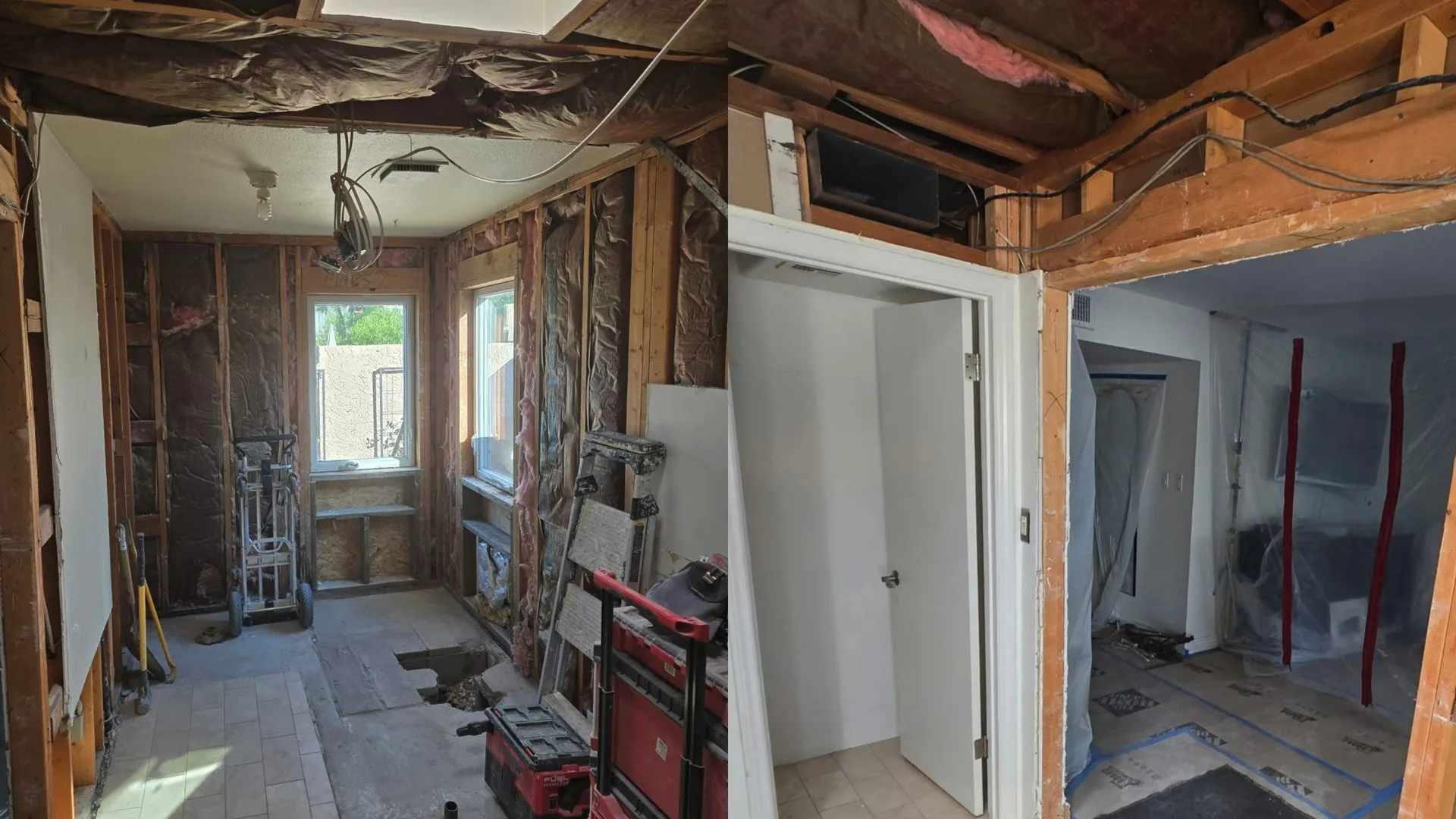
Water got into the house: the first hour decides how much has to come out
Water that is still spreading, or still sitting in carpet, drywall and insulation, does more damage with every hour. The order matters: make it safe, stop the source, document, then start removing water. Each step below protects the next.
- Make it safe. Stay out of rooms with standing water if outlets, cords or appliances are in it. Turn off power to the affected area at the breaker only if you can reach the panel on dry ground.
- Stop the source. Close the main shutoff for a pipe failure. For a sewer backup, stop using every drain in the house.
- Photograph and video everything before anything is moved, including the source, the wet surfaces and damaged belongings.
- Lift what you can. Furniture legs, rugs, books and electronics off wet floors.
- Call, and describe what the water is and where it came from.
Where the water came from decides what is safe to handle yourself, which is what the next section covers.
Clean water, gray water or sewage: the source sets the safety rules
| Source | Examples | How it is handled |
|---|---|---|
| Clean water | Supply line break, overflowing sink with clean water, a leaking water heater | Dried quickly, often with the materials saved |
| Gray water | Washing machine or dishwasher overflow, a bathtub that drained over | Treated as contaminated, with more materials removed |
| Black water or sewage | Sewer backup, toilet overflow, flood water from outside | Treated as a health hazard, with porous materials removed rather than dried |
Clean water can become contaminated if it sits. Do not walk through suspected sewage barefoot, run fans that spread it, or let children and pets into the room. Standing sewage is also a reason to stop using the plumbing until the line is cleared, which the sewer backup page explains.
Drying what can be saved and removing what cannot
Restoration is mostly a drying job. Water moves into materials through absorption, and surfaces that feel dry can still hold moisture inside. Drying means removing standing water, then moving moisture out of the air and the structure until readings return to normal.
- Water extraction. Pumps and wet vacuums remove standing water.
- Removal of unsalvageable material. Soaked drywall, insulation and padding are cut out where drying will not work.
- Air movement. Fans move air across wet surfaces to pull moisture out.
- Dehumidification. Equipment lowers humidity so moisture leaves the materials.
- Moisture readings. A meter confirms when materials are dry, rather than guessing by touch.
Ask for moisture readings at the start and end of the job. They are the way to prove the structure is actually dry.
Hardwood, carpet, ceiling and walls: how each material responds
Hardwood and wood flooring
Wood absorbs water and swells, and the floor can cup or buckle as it dries. Quick drying can save some floors. Boards that have buckled or darkened may need replacement.
Carpet and padding
Carpet from clean water can often be dried in place, while padding is commonly replaced. Carpet touched by gray or black water is usually removed.
Ceilings
A stained or bulging ceiling holds water above it. Do not stand under a bulge. A small opening to let the water drain can prevent a larger collapse, and the source above needs to be found.
Walls and insulation
Drywall wicks water upward from the floor. Insulation holds water and dries slowly. Both are checked and opened where moisture remains.
Water in the house right now?
Call and tell us where it came from and what it has reached.
Mold: what drying has to beat
Mold needs moisture and organic material, and wet drywall, wood and carpet provide both. The sure way to prevent it is to dry the structure quickly. Visible growth, a musty smell or a stain that returns after drying is a sign that moisture is still present somewhere.
- A musty smell often means moisture inside a wall or under flooring.
- Stains on a ceiling or wall that spread or return point to an ongoing source.
- Do not paint over stains. The moisture is still there.
- Wear protection if you disturb moldy material, and keep the area closed from the rest of the house.
If you have health concerns, such as asthma or a weakened immune system, ask your doctor before cleaning moldy areas yourself. Moisture that keeps returning usually means a leak that has not been found. The tracing the source of the moisture page explains how that is done.
Storms, floods and ice dams
Not all water damage starts with a pipe. Heavy rain, rising water and melting snow can all push water into a home. The plumbing side of those events is where water enters through drains, backs up through floor drains or comes up from the lowest opening in the house.
- Floor drains that bubble during heavy rain point to water entering the sewer system faster than it can leave.
- Ice dams force melted snow under roofing and into ceilings and walls.
- Flood water outside the house is treated as contaminated.
- Document the high-water line with photos before cleanup.
Water that enters through the foundation is a drainage problem as well as a cleanup problem, and the stopping groundwater at the foundation page covers the longer-term answer.
Commercial water damage
A leak in a shop, office or restaurant adds problems a home does not have: inventory, equipment, a business that has to reopen and often a landlord and an insurer to coordinate. Speed and records matter even more.
- Tell us the type of space, the size of the affected area and the source of the water.
- List stock, equipment and fixtures that were touched.
- Identify who is responsible for the building and who holds the insurance.
- Ask for written documentation of the work and readings.
Where a tenant and an owner are both involved, agree early on who is authorizing the work.
Insurance, documentation and what to keep
Insurance is its own process, and the cleanup record is the evidence for it. Call your insurer early, because the policy may set steps that have to be followed. Policies differ on what is covered, and sewer backup coverage is often a separate endorsement.
- Photos and video from before cleanup begins.
- A list of damaged belongings with rough age and value.
- The source of the water and what was done to stop it.
- Moisture readings and a description of the drying work.
- Receipts for emergency steps you took yourself.
- The failed part, if a pipe or fitting caused it.
Do not throw away damaged items until your insurer has seen them or told you that you can. Ask the insurer what they need before the work starts.