
Leak detection
Water Leak Detection for Elizabethtown, KY Homes: Find the Source Before You Open a Wall
A bill that jumped, a stain that keeps returning or a damp floor with no visible pipe: this page explains the checks you can run yourself and what a detection visit adds.
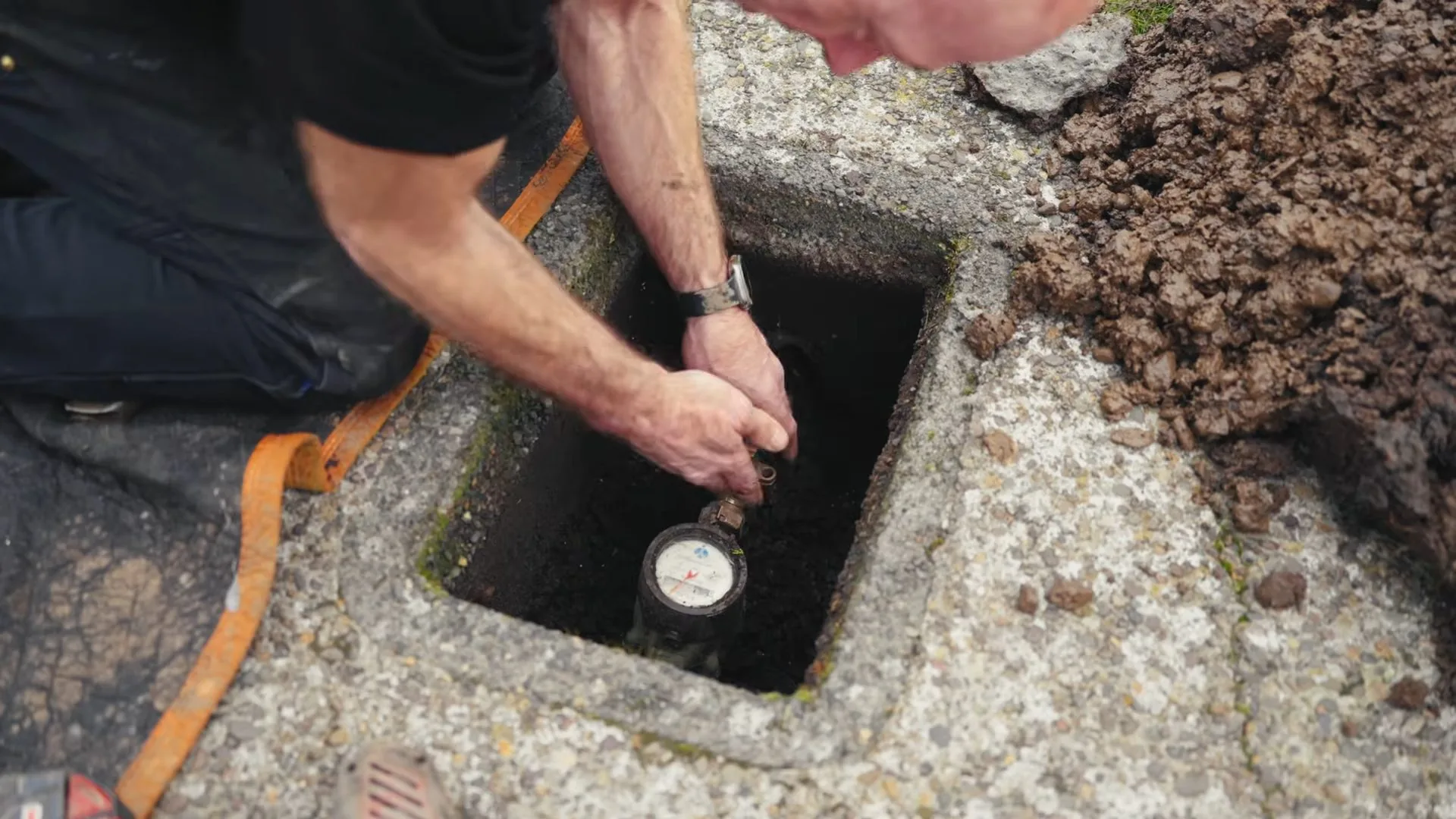
Is it a leak? The checks you can do safely
A water bill that climbed, a stain that keeps coming back or a musty corner usually means water is going somewhere it should not. The first job is to confirm there is a leak, not to find it.
- Read the meter. Turn off every tap and appliance, note the reading and the little low-flow dial if there is one, wait an hour, then read it again. A moving dial means water is flowing somewhere.
- Check the toilets. A few drops of food coloring in the tank, no flush for fifteen minutes, then look for color in the bowl.
- Close the main shutoff and watch the meter. If it still moves, the leak is between the meter and the house. If it stops, the leak is inside.
- Note what you hear. Hissing, trickling or a pump that cycles with no use is worth telling the plumber.
These checks tell you if the leak exists and roughly which side of the house it is on. They cannot tell you where it is, which is the part a leak detection visit adds.
If you rent, tell the landlord or property manager before you book anyone. Census figures for 2020 to 2024 put owner-occupancy in Elizabethtown at 49.3%, so a large share of households need an owner to approve the visit.
Early signs worth acting on before the damage shows
Small leaks rarely announce themselves. They leave marks, and the marks show up before the damage is serious.
- A water bill that rose with no change in how you use water
- A warm spot on a floor, or a floor that feels soft or looks like it is lifting
- A musty smell in a closet, cabinet or basement corner
- Paint that bubbles or peels on a wall, or a stain that spreads even in dry weather
- The sound of running water when everything is off
- Low pressure at one fixture or the whole house
Catching one of these early means less drywall and subfloor to tear out later. The rule of thumb is simple: if the cause is still unclear after the meter check, ask for a visit and do not wait for the stain to grow.
Ceiling, wall, floor and basement water: likely sources
The place you see water is often not where it starts. Water follows framing, pipes and gravity before it shows up.
| Where you see it | Common source | What to ask a plumber to check |
|---|---|---|
| Ceiling stain under a bathroom | Tub, shower, toilet supply or drain above | Supply and drain lines, shower pan and seals |
| Stain under a kitchen | Dishwasher line, sink drain or supply | Connections, drain and the shutoff valves |
| Wet wall with no fixture nearby | Supply line or a drain inside the wall | Pressure test and a moisture scan of the wall |
| Basement wall or floor wet after rain | Groundwater or a drain, not always a pipe | Whether the water appears with no rain, which points to a pipe |
| Damp slab or floor | Supply line, hot line or a drain under the floor | Acoustic or thermal tracing before any cutting |
A basement that is wet only after rain is a drainage question, covered on the waterproofing a basement page. A basement that is wet in dry weather is more likely a pipe.
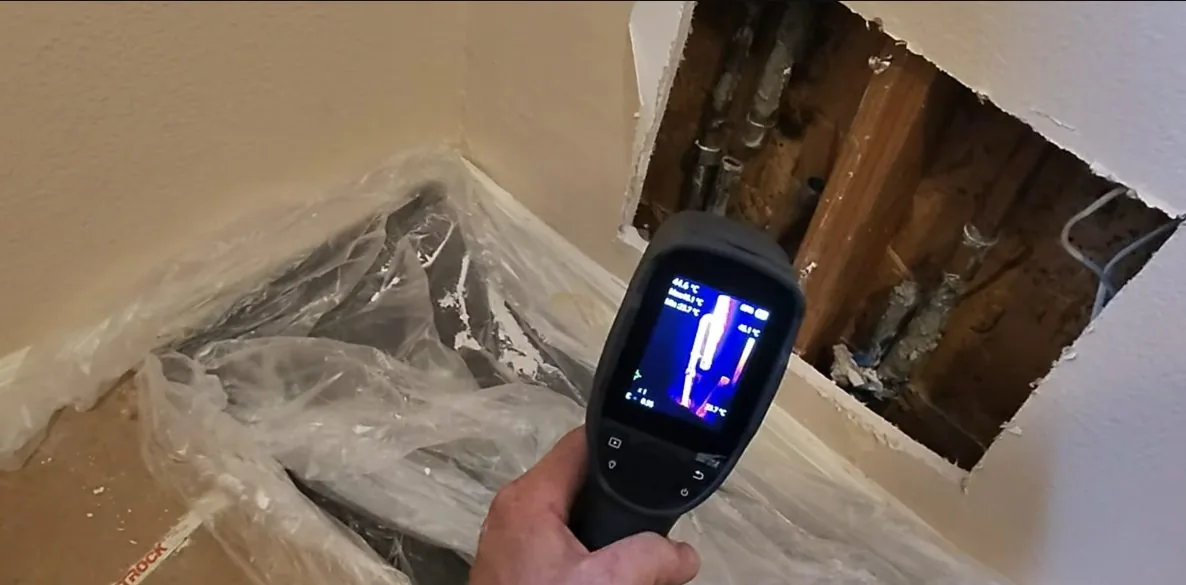
How plumbers find a leak without opening the whole wall
There are several ways to locate a hidden leak, and no single one works for every pipe. The common methods are listening equipment that picks up the sound of escaping water, thermal imaging that shows temperature changes on a surface, electronic moisture meters and, for pressurized lines, tracer-gas testing.
You do not need to know the gear. You need to ask which method applies to your leak and why, what it can and cannot tell you, and whether the plumber will mark the spot before cutting. A visit worth paying for ends with a spot on the wall or floor and a plan, not a guess.
Pinhole leaks in copper pipe: one hole, or a pattern?
A pinhole in a copper line is usually the first leak, not the last. Corrosion from the inside or outside thins the wall in several places, and the thinnest one gives way first.
If you have had one pinhole, ask the plumber to check the rest of that line and look for green or white crust, pitting or other spots. A single repair is fine for an isolated pinhole. A pattern is a different conversation, and the page on whole-house repipe explains how to weigh it.
Yard and service line leaks: whose pipe is it?
A soggy patch of lawn with no rain, a drop in pressure at every tap or a meter that spins while the house is quiet can point to the line between the meter and the home. The meter side belongs to the water utility. The house side belongs to you.
Before anyone digs, Kentucky811 has to be called so buried gas, electric and other lines are marked. Ask who will make that call. If a leak is on the utility side of the meter, report it to them rather than paying for repair there.
Hardin County is karst terrain, and the Kentucky Geological Survey notes that water can move through underground channels. A wet yard or basement after rain is therefore not always a pipe. A spot that stays wet in dry weather points back to the plumbing.
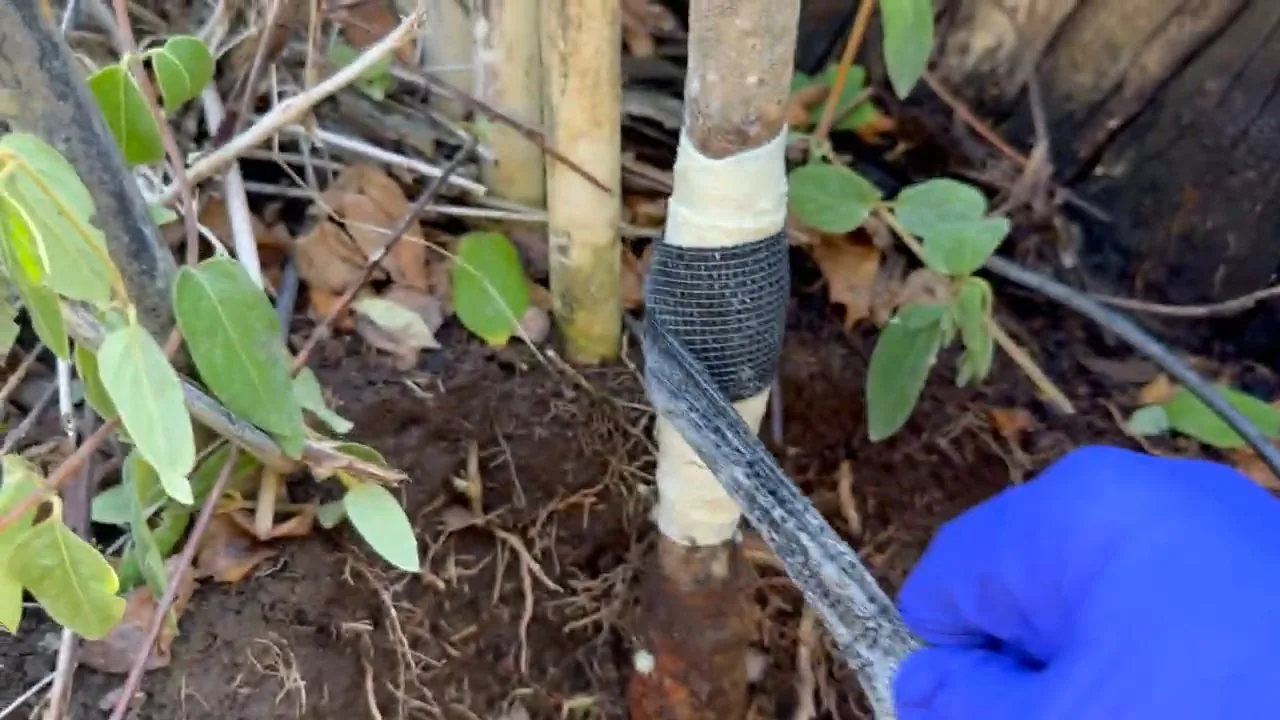
Not every leak is a plumbing leak
Water stains on a ceiling can come from the roof or a clogged gutter, and a lawn that stays soaked can come from a leaking irrigation valve or a pool. These need a roofer, a gutter installer, an irrigation technician or a pool service, not a plumber.
A plumber can still tell you whether the water is on a pressurized line. If the pressure test holds and the stain returns after rain, the source is outside the plumbing. Commercial buildings are not covered on this page. If your property is not a home, mention it when you call.
If you smell gas, that is a different emergency
Water leaks and gas leaks are different problems. The signs are a rotten-egg odor, a hissing at an appliance or a dead patch in the lawn. If you notice any of them, leave the building, do not switch anything on or off, and call 911 or your gas utility from outside.
Once the utility has cleared the home, gas line repair covers finding and fixing the failed fitting or line.
Before you book: what a good leak visit should deliver
- The method used and why it fits your leak
- A marked location, with photos, before any wall or floor is cut
- The leak's cause, in plain words you can repeat to a landlord or insurer
- Other pipes checked while the plumber was there
- A written scope for the repair, separate from the detection
Describe what you are seeing
Call and say where the water shows up, what the meter did and when you first noticed it.