
Trenchless pipe lining and relining
Trenchless Sewer Repair in Elizabethtown, KY: Reline or Replace the Pipe Without Digging the Yard
Lining and pipe bursting repair a buried pipe from small access points. This page explains how they compare with digging and when a trench is still the better answer.
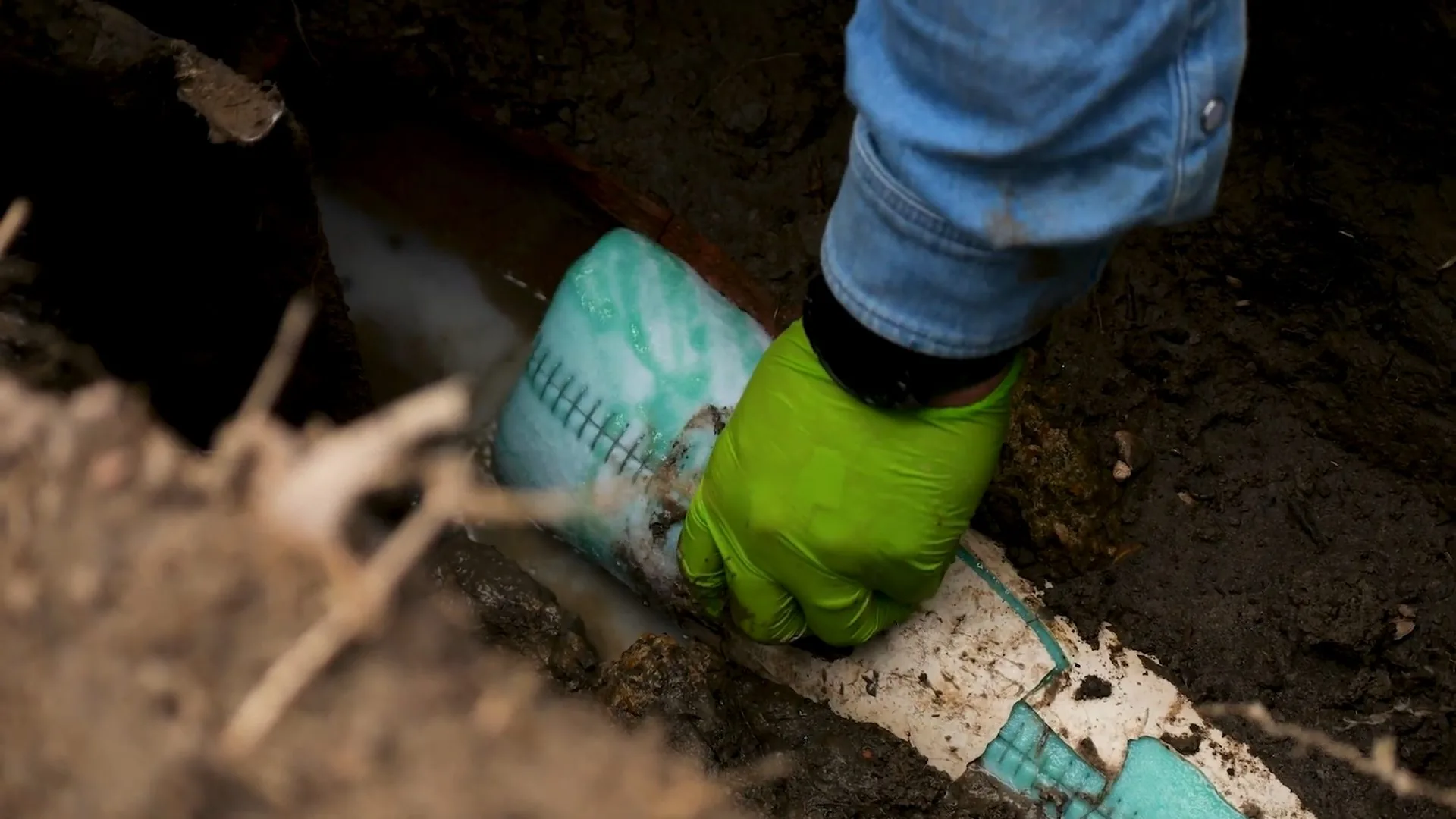
You need a sewer repair but do not want the yard dug up: start here
Trenchless work repairs or replaces a buried pipe without opening a trench along its whole length. It can protect a driveway, a mature tree or a finished landscape. It does not fit every pipe, and a good plumber will say when it does not.
- A pipe that has cracks or small holes but is still in line.
- Roots entering through joints along the run.
- A line under a driveway, patio, porch or large tree.
- A long run where digging would cross a lot of finished ground.
The next sections explain the two main methods, how they compare with digging and the cases where a trench is still the right answer.
Two ways to fix a pipe without a long trench
Cured-in-place lining
A flexible tube soaked in resin is pulled into the old pipe and inflated against the walls. Heat or light cures it into a hard pipe-within-a-pipe. The new surface is smooth, seals joints and can stop roots from entering.
Pipe bursting
A tool pulls a new pipe through the old one while breaking the old pipe outward. It replaces the line instead of lining it, and it needs a small pit at each end rather than a trench along the whole run.
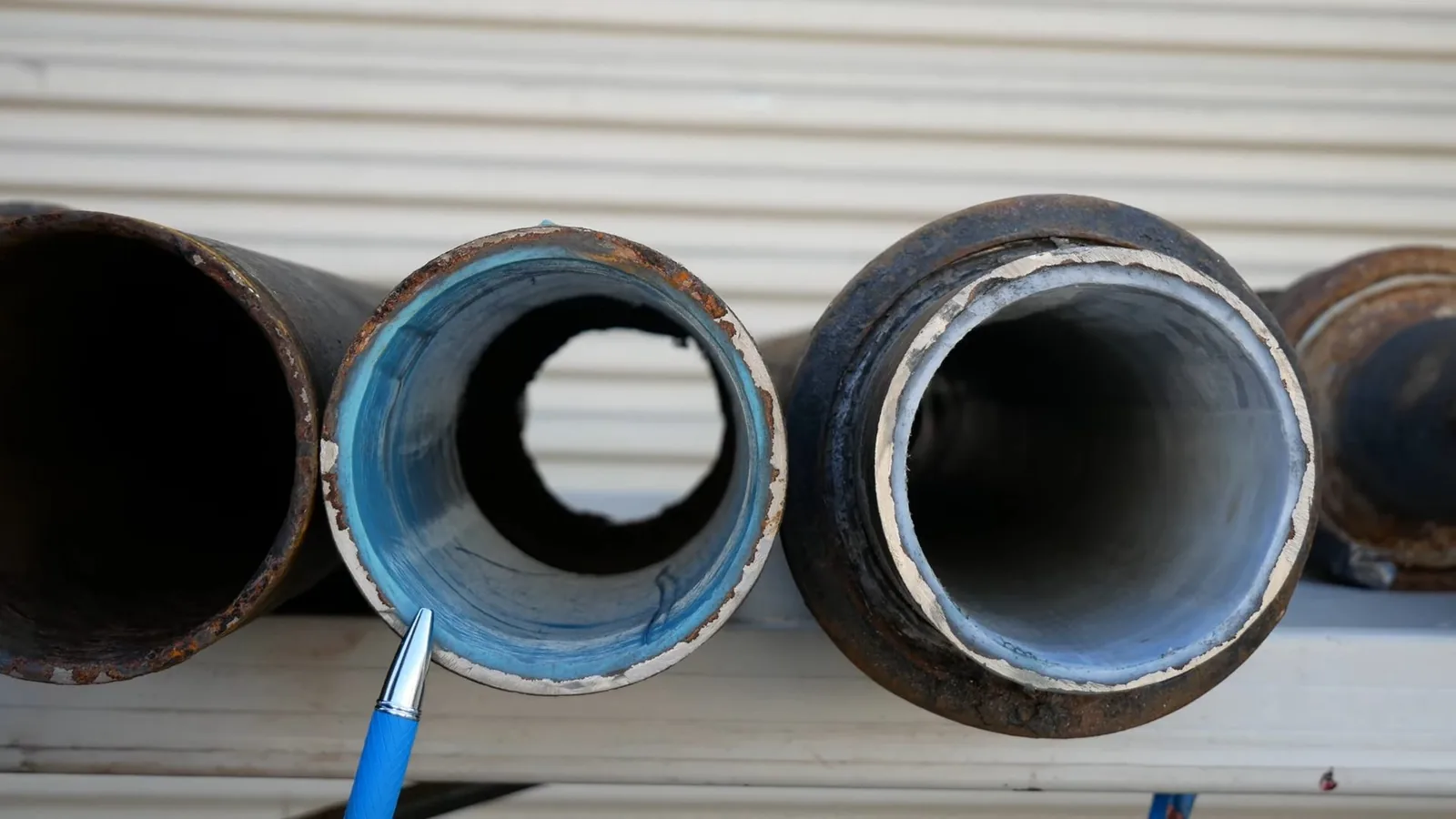
Trenchless versus open trench: what actually differs
| Trenchless lining | Open trench replacement | |
|---|---|---|
| Digging | Small access points | A trench along the pipe |
| Yard and hardscape | Usually little disturbance | Cuts through lawn, driveways and landscaping |
| Pipe must be | Continuous enough to line, which a camera shows | Any condition |
| Collapsed or badly offset sections | Often not suitable | Can replace or re-grade |
| Pipe diameter | May be slightly reduced by the liner | Same or larger pipe |
| Where it is explained | This page | See traditional sewer replacement |
Each side of this table has cases where it is the better choice. The decision depends on what the camera shows, not on a preference for one method.
When a liner will not work
Lining depends on the old pipe holding its shape well enough to receive a liner. Several conditions rule it out or require a different plan.
- A collapsed or crushed section the liner cannot pass.
- A severe offset or bellied section that holds water.
- Pipe that has broken apart rather than cracked.
- Connections or fittings that cannot be reopened after lining.
- A line that needs a change of route or slope.
In these cases a spot dig or a full trench is the honest answer. A plumber who says lining works for every pipe has not looked at your footage.
Want to avoid digging the yard?
Call and tell us what the camera showed or what the line is doing.
Before any trenchless work: camera, cleaning and a written scope
A liner is only as good as the preparation. The pipe has to be cleaned of roots, scale and debris so the liner bonds to the wall. A camera pass before and after cleaning shows what is there.
- Camera inspection to see the whole line.
- Cleaning, which often includes jetting away roots and scale so the liner can seat.
- A second camera pass to confirm the pipe is ready.
- Installation and curing of the liner.
- A final camera pass and a copy of the recording.
Ask for the recordings from each stage, the length of the liner and what happens at the connections.
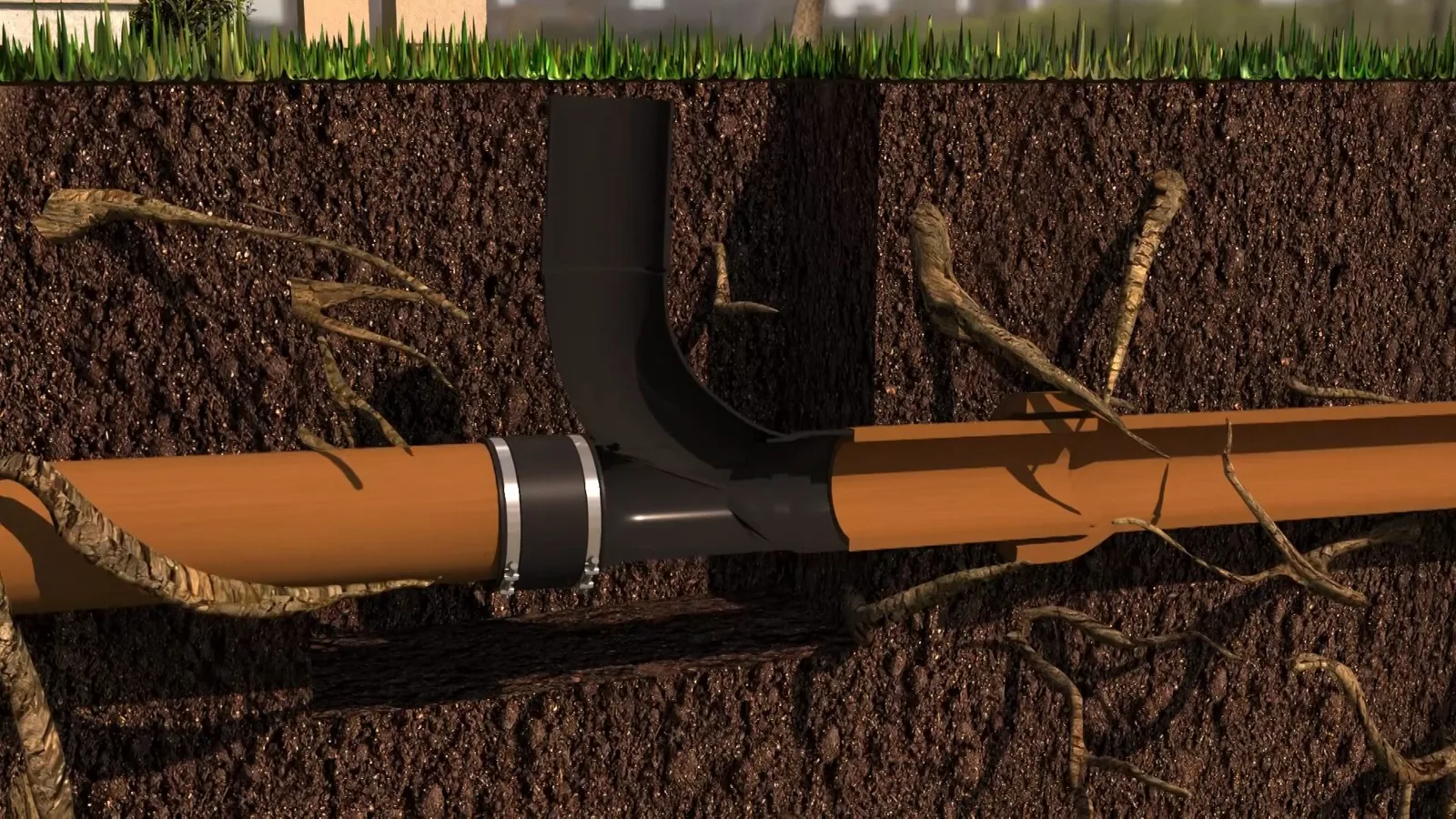
Lining under a slab: the same method, a different location
Trenchless methods are not limited to yard lines. Where a drain line runs beneath a concrete slab, lining can avoid cutting the floor along the whole line. Supply lines under a slab are a different problem, and some are rerouted through walls or the attic instead of being relined.
The slab leak page covers the decision for supply lines in detail, including rerouting a leaking line overhead. The method on this page applies to drain and sewer pipe.
Pits, Kentucky811 and the digging a trenchless job still needs
Even a trenchless job needs access points. A pit or two may be needed to reach the pipe, usually at a cleanout, at a failed section or at the tie-in to the main, so ask where each pit would go before work begins. That digging triggers the same rule as any other: call Kentucky811 first, and wait for the marks. Kentucky law requires notice before most excavation under KRS 367.4911.
Karst terrain in Hardin County, mapped by the Kentucky Geological Survey, is another reason to look at the footage before choosing a method. Voids or soft ground near a pipe can affect whether a liner or a full replacement is the sounder choice. Ask about permits and inspection too. The Hardin County Health Department lists plumbing inspectors at 270-769-3071.
What to ask when you compare quotes
- What did the camera show, and can I see it?
- Why lining or bursting instead of a trench, or the reverse?
- How much of the line is being lined and from where to where?
- What happens at the connection to the house and to the main?
- What will be left in the yard when the work is done?
- What recordings and records do I get afterward?
The answers help you compare quotes on the same section of pipe. If two quotes cover different lengths, they are not the same job.
Signs your line may be a candidate for lining
Lining makes sense in specific situations, and it is useful to know what they look like before a plumber opens the conversation.
- A camera shows roots entering at several joints along a pipe that is otherwise round and in line.
- The pipe has hairline cracks or surface wear but still holds its shape.
- Repeated cleanings keep clearing the same root mass.
- The line runs under something expensive to dig up and replace.
A line with those traits may be a fit. A line with a crushed section probably is not. The recording is what separates the two, and a quote that does not refer to it deserves a second look.
What a liner does and does not fix
A cured liner gives the old pipe a new smooth inner surface, seals the joints that roots used to enter and restores flow. It does not change the slope of the pipe, repair a section that is missing or reconnect a line that has separated.
It also does not clean the pipe on its own. If the old pipe is not cleaned first, the liner can cure over scale and wrinkle. That is why the cleaning stage and the camera passes in the process above matter as much as the liner itself. Ask what the plan is for the connections at either end, because that is where a lining job most often needs extra work.