
Water heater repair
Water Heater Repair for Elizabethtown, KY Homes: Stop the Leak or Find Why the Hot Water Stopped
Water under the tank, a pilot that will not stay lit or showers that run cold: this page explains how to read the symptoms and what a repair visit covers.
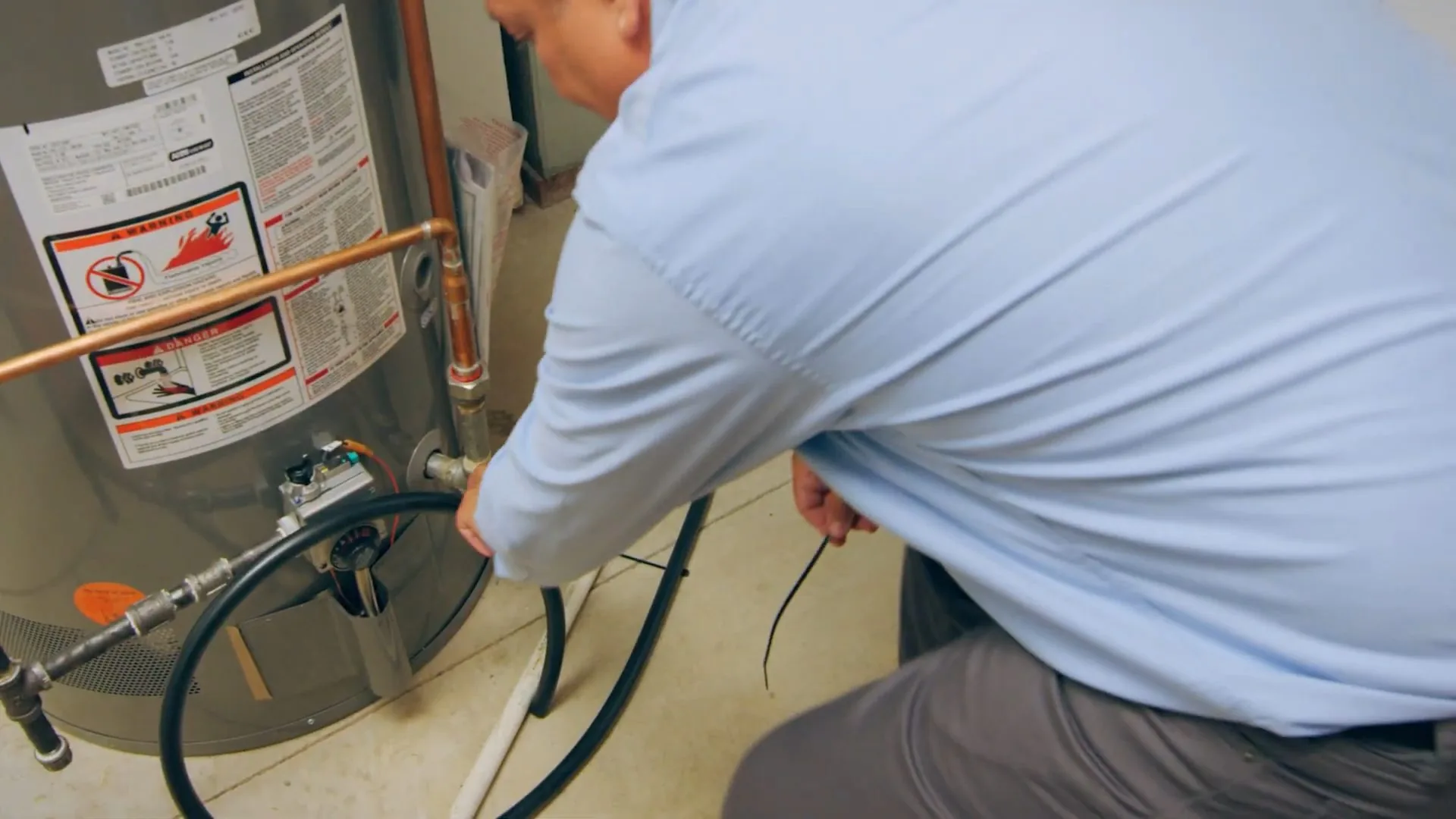
Water on the floor or no hot water: what to do before you call
A water heater problem usually shows up as one of two things: water where it should not be, or hot water that has gone missing. Start by working out which, because the safe first step is different.
- If water is pooling, shut off the cold supply to the heater. The valve is on the pipe entering the top of the tank. Turn it clockwise.
- Turn off the energy source. For an electric heater, switch off its breaker. For a gas heater, turn the gas control to off or pilot.
- If you smell gas, leave the house. Do not touch switches or a phone inside. Call the gas utility from outside.
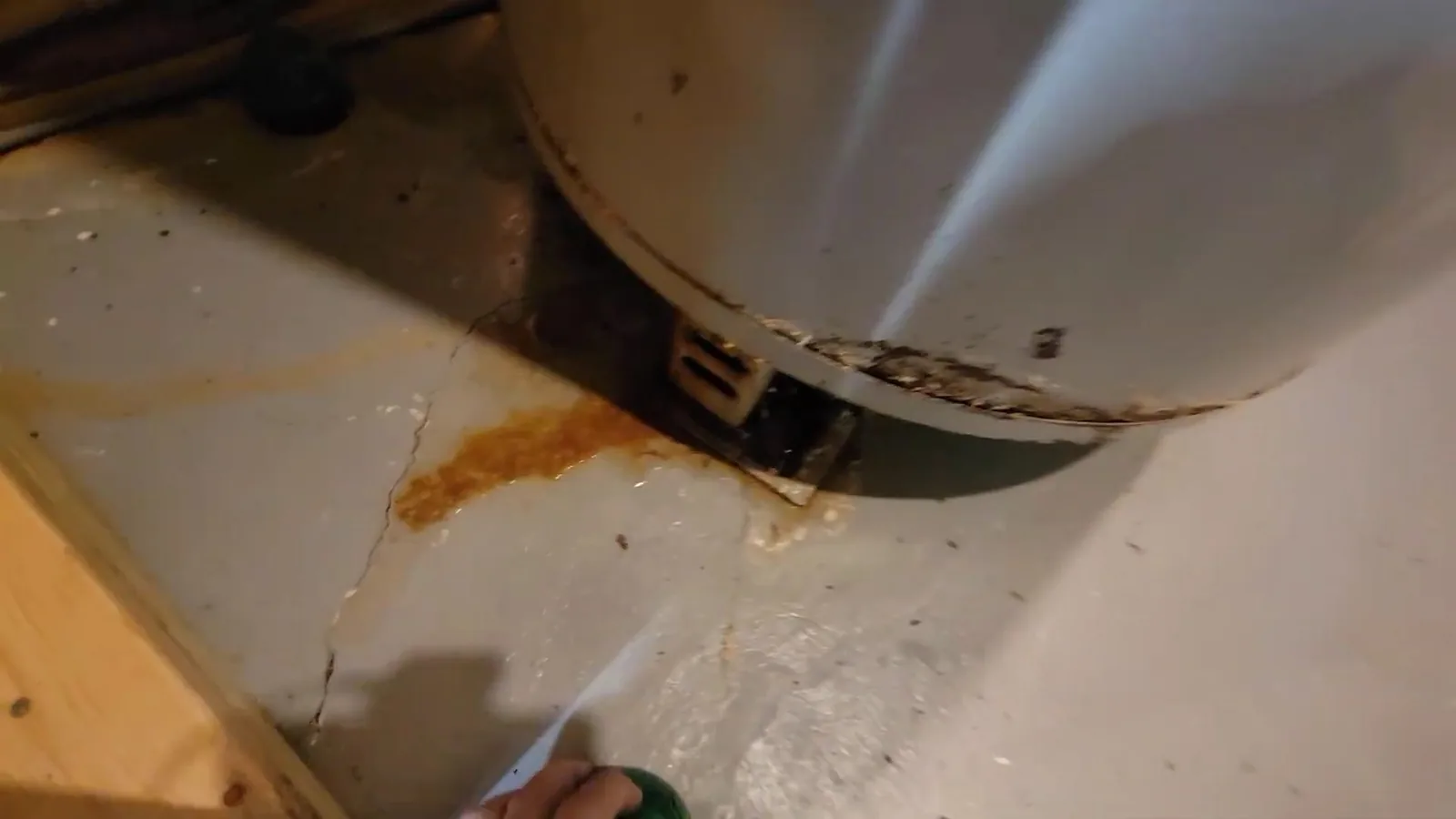
- Check where the water is coming from. A wet tank base, a dripping pipe on top or a discharge pipe from the relief valve point to different problems.
- Take a photo of the tank, its label and the leak, then call.
If there is no hot water but nothing is leaking, leave the supply on and go to the checks below.
A leaking water heater: where the water comes from decides the repair
Not every drip means the tank has failed. A leak from a fitting or valve is a repair. A leak from the tank body is usually the end of the tank. Looking carefully at the source saves a wrong guess.
| Where the water appears | What it often means | Repair or replace |
|---|---|---|
| Dripping from a pipe or fitting on top | A loose or worn connection | Usually a repair |
| Water from the relief valve or its discharge pipe | Pressure or temperature is high, or the valve is worn | Check pressure first, then the valve |
| Water around the drain valve at the base | A worn drain valve | Usually a repair |
| Water seeping from the tank base or body | The tank may have corroded through | Usually replacement |
| Condensation on a cold tank | Humid air, not a leak | No repair needed, but confirm |
A leak that comes from the tank itself cannot be patched. If that is what you have, the page on replacing the whole unit covers what comes next.
Gas water heater repair: no hot water, a pilot that will not stay lit
A gas heater has a burner, a pilot or ignition system, a gas control and a vent. Most gas heater complaints are about one of those parts.
- A pilot that goes out repeatedly, which can point to a failing thermocouple or a draft problem.
- A burner that lights but produces little heat, which may be sediment or a dirty burner.
- A burner that will not light at all.
- Soot or a yellow flame, which needs attention before the heater is used again.
- A smell of gas, which is a leave-the-house situation.
Gas appliances need careful handling. If you smell gas, leave and call the gas utility. For gas piping leaks that are not at the appliance, see gas piping repair.
Electric water heater repair: heating elements, thermostats and breakers
An electric tank heats water with one or two elements controlled by thermostats. The common failures are a burned-out element, a failed thermostat or a tripped high-limit switch.
- Lukewarm water often means one of two elements has failed.
- No hot water at all can mean a tripped breaker, a failed upper element or a high-limit switch that has tripped.
- Water that runs out quickly can mean a failed lower element or sediment on the tank bottom.
- A breaker that trips repeatedly points to a short that should not be reset again and again.
Turn the breaker off before anyone opens a panel on the tank. Do not reset a breaker that has tripped more than once.
No hot water or water under the tank?
Call and tell us whether it is gas or electric and where the water is.
Sediment, noise and slow recovery: the problems that grow slowly
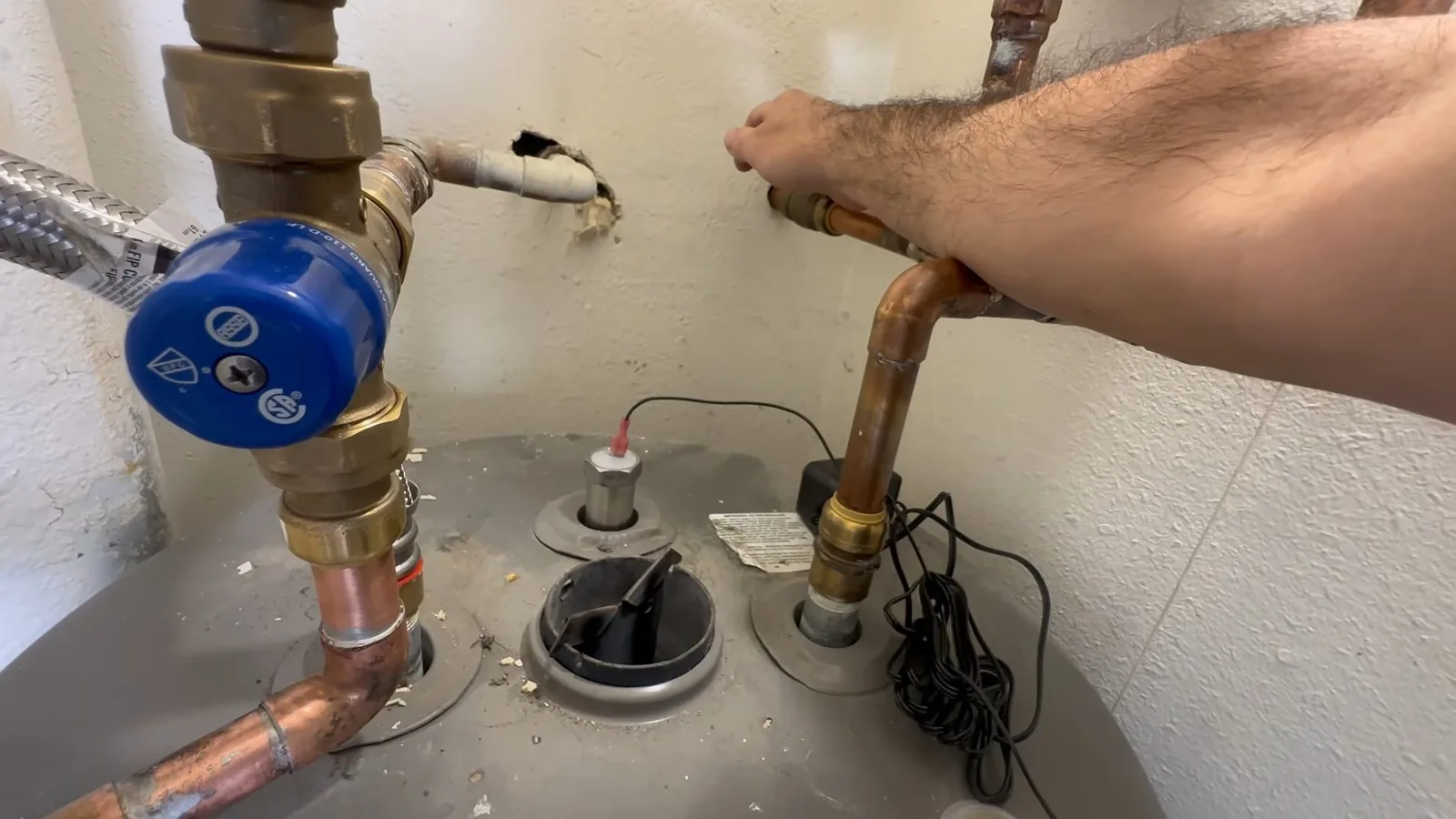
Minerals settle at the bottom of a tank and form a layer that the burner or lower element has to heat through. Over time that layer makes the heater louder and slower, and it can shorten the life of the tank.
- Popping or rumbling when the heater runs.
- Rusty or cloudy hot water.
- A heater that takes much longer to recover than it used to.
- Hot water that runs out sooner than it used to.
How much sediment your tank collects depends on your water and how the heater is used. A plumber can flush a little water from the drain valve during a visit and show you what comes out.
Water heater and fixture problems that show up together
Sometimes the heater is fine and the problem is a fixture. A mixing valve or cartridge in a shower can send cold water into the hot line. A faucet that is leaking at the hot side can look like a heater problem. A plumber should check both before replacing parts.
- Hot water at one fixture only points to that fixture's valve or cartridge.
- Hot water that fades in a shower can be a failing mixing valve.
- Hot water that is hot at the heater and cold at the tap can be a pipe or recirculation issue.
- A dripping hot-side faucet wastes heat and water.
For a fixture that needs its own repair, see fixing a dripping hot-water faucet.
Repair or replace: questions to ask before agreeing to either
A repair is worth it when the tank is sound and the failed part is inexpensive to swap. Replacement is worth considering when the tank itself has failed or when the repair list is getting long. Ask the plumber to separate those two cases clearly.
- Which part has failed and can I see it?
- Is the tank itself sound?
- What else did you check while you were there?
- What will the repair not fix?
- If I decide to replace instead, what changes?
Check the label on the tank for the model and manufacture date, and photograph it. That helps a plumber tell you whether parts are available and how old the unit is. If you want to compare with a tankless unit, the tankless alternative has its own page.
Permits and venting in Elizabethtown
Replacing a heater often involves a permit and an inspection, and a gas heater adds venting and combustion air to the checklist. A simple part swap is different from a new installation, but it is still fair to ask.
Hardin County Health Department lists plumbing inspectors at 270-769-3071. That is a place to ask who handles your address and what a repair or replacement requires there.