
Garbage disposal repair and installation
Garbage Disposal Not Working in Elizabethtown, KY? Fix the Jam or Leak, or Replace the Unit
A hum with no spin, a leak under the sink or a unit that will not turn on: this page explains what each symptom usually means and when a new disposal makes more sense.
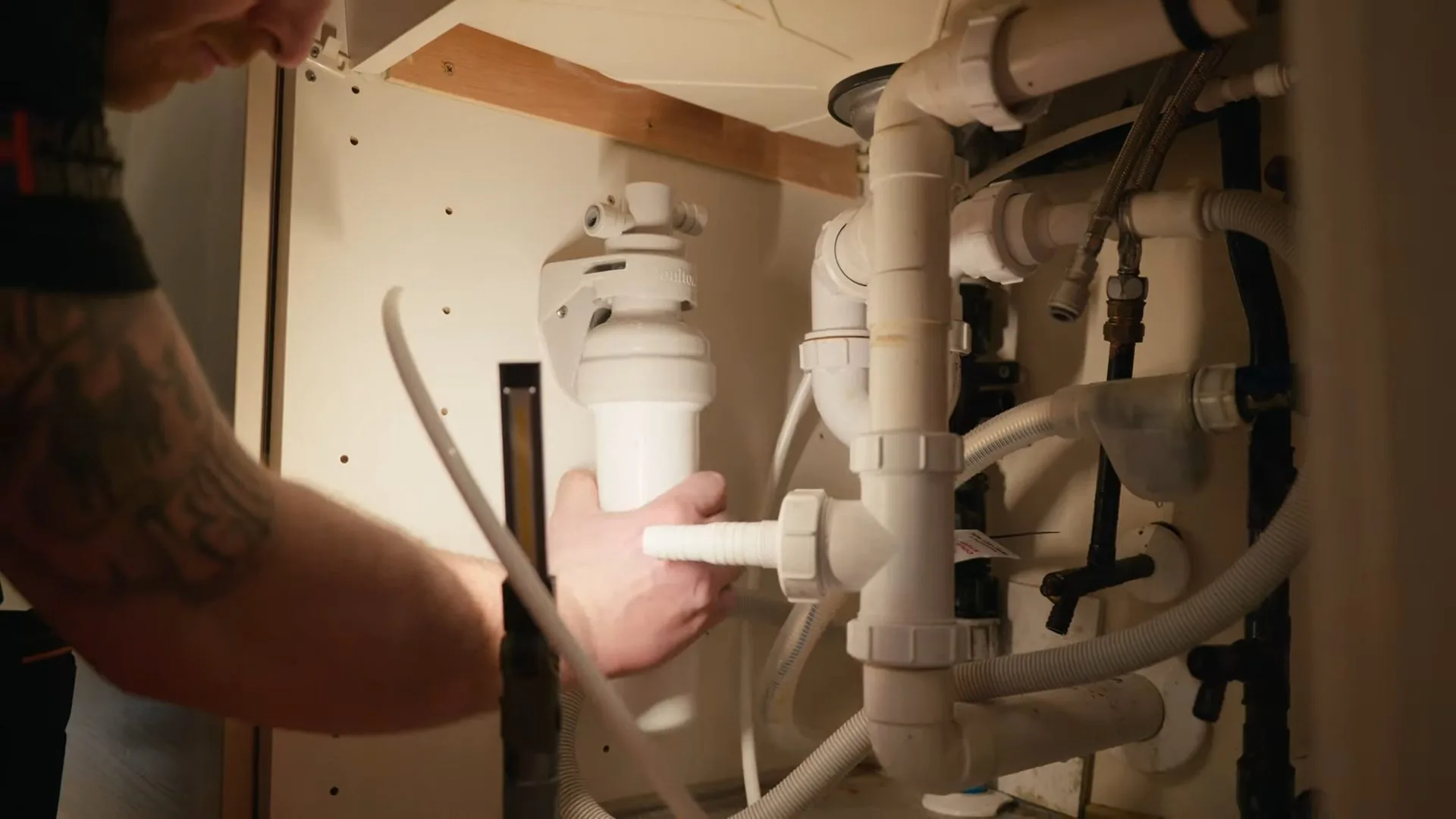
The disposal hums, leaks or will not turn: start here
A disposal fails in a handful of predictable ways. A hum with no spin, a leak, a jam and a smell each point to a different cause, and each has a different first step.
- Switch the disposal off at the wall and, for any work near the drain, at the breaker.
- Never put a hand in the disposal. Use tongs or pliers to remove anything you can see.
- Look under the sink for water at the disposal body, the drain connections and the dishwasher hose.
- Check the reset button on the bottom of the unit. A tripped reset means it overheated or jammed.
- Note the sound: humming, grinding, clicking or silence.
If water is spreading, close the shutoffs under the sink and call.
Hum, click or silence: what each disposal symptom means
| What you notice | Likely cause | What happens next |
|---|---|---|
| Hum, no spin | A jam or a seized motor | Clear the jam with the hex socket on the bottom, or replace the unit |
| Clicking, then nothing | A jammed flywheel or a tripped reset | Free the jam and reset |
| Silent, no hum | No power, a tripped reset or a failed switch | Check the outlet, reset button and switch |
| Water under the disposal | A failed seal, a loose connection or a cracked housing | Tighten or reseat a connection, or replace the unit |
| Slow draining sink | A clog beyond the disposal | See clearing the sink line |
| Bad smell | Food buildup in the chamber or drain | Clean the chamber and flush the line |
A disposal that leaks from its body cannot be patched. A leak at a connection is a repair.
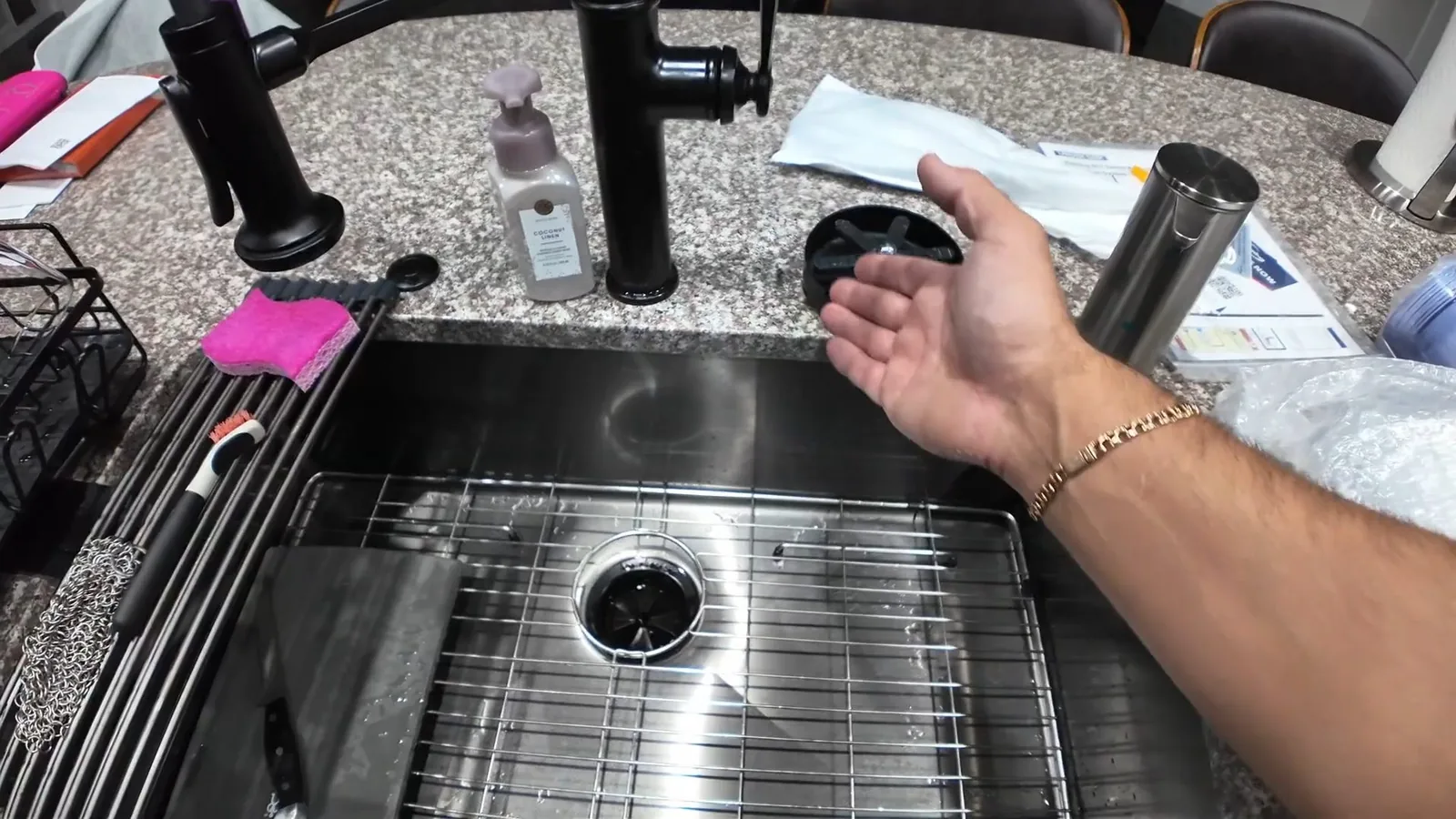
Garbage disposal leak repair: top, side or bottom
Where the water shows up tells you which seal has failed. Dry the disposal and the pipes first, then run water and watch where the first drop appears.
- At the sink flange at the top, the plumber's putty or gasket has failed.
- At the dishwasher inlet, the hose clamp is loose or the hose has worn.
- At the discharge pipe on the side, the gasket or bolts need attention.
- From the bottom or body, an internal seal has failed and the unit is at the end of its life.
A leak from the top flange is a repair. A leak from the bottom of the unit means replacement.
Repair or replace a disposal
- Repair when the problem is a jam, a loose connection or a worn gasket.
- Replace when the housing is leaking or the motor has failed.
- Replace when the unit is noisy, slow and has been repaired before.
- Consider a larger motor if the old unit struggled with normal use.
Ask the plumber what failed and whether the repair addresses the cause. A disposal that jammed because of a spoon is different from one that jams every week.
Check the label on the unit for the model and horsepower so a replacement can match the existing mounting.
Disposal humming or leaking?
Call and tell us the sound it makes and where any water shows up.
Garbage disposal installation: what the visit includes
A new disposal connects to three places: the sink flange above, the drain below and, in many homes, the dishwasher. It also needs power, either hardwired or through a plug.
- The old unit is disconnected and removed.
- The mounting assembly is attached to the sink and the new unit is hung from it.
- The discharge pipe and, if present, the dishwasher hose are connected.
- Power is connected, and the unit is tested with water running.
- The dishwasher knockout is removed from the inlet if a dishwasher is connected.
Forgetting the dishwasher knockout is a classic mistake: the dishwasher then cannot drain into the disposal. Ask whether it will be checked.
Dishwasher connections and the sink drain
The dishwasher often drains through the disposal, so a problem in one shows up in the other. A dishwasher that leaves standing water may be blocked at the disposal inlet. A sink that backs up may be telling you the drain line behind the disposal is the problem.
If the sink drains slowly even with the disposal off, the issue is beyond it. The pipe wall that grease keeps coating explains what repeated kitchen clogs usually mean.
What not to put down a disposal
- Grease, fat and oil, which cool and coat the pipe beyond the disposal.
- Fibrous food such as celery, corn husks and onion skins.
- Pasta, rice and potato peels, which swell and form paste.
- Coffee grounds in large amounts.
- Bones, pits and hard shells.
- Anything that is not food.
Run cold water before, during and for a short time after using the disposal. It keeps the unit and the line moving.
Noise, smell and the signs a disposal is wearing out
A disposal that has worked for years usually gives warning before it quits. Learning the signs lets you replace it on your schedule instead of in the middle of cooking.
- Louder grinding or a rattle that was not there before.
- Slow grinding, with food left behind after a run.
- Frequent resets or jams.
- A rusty look around the base or dark water around the seam.
- A smell that comes back right after cleaning.
None of these signs means the unit is failing right now, but several together are a reason to plan the replacement. If the unit is on its last legs, a leak can come without warning.
Cleaning and care that extends the life of a disposal
A disposal works best when it is used lightly and cleaned regularly. A few habits keep it from jamming and from filling the kitchen with a smell.
- Run cold water for a few seconds before and after each use.
- Feed food in small amounts rather than a full load at once.
- Grind ice and citrus peel only if the manual allows it.
- Clean the splash guard, which collects film that smells.
- Do not use chemical drain cleaner in a sink with a disposal.
Disposals are designed for soft food waste. Treating one as a trash can is the most common way to shorten its life.