
Slab leaks
Warm Floors and Water Sounds: Slab Leak Detection and Repair in Elizabethtown, KY
Warm tile, water running in a silent house or a meter that will not stop: this page explains how to confirm a leak under the slab and what the repair options really involve.
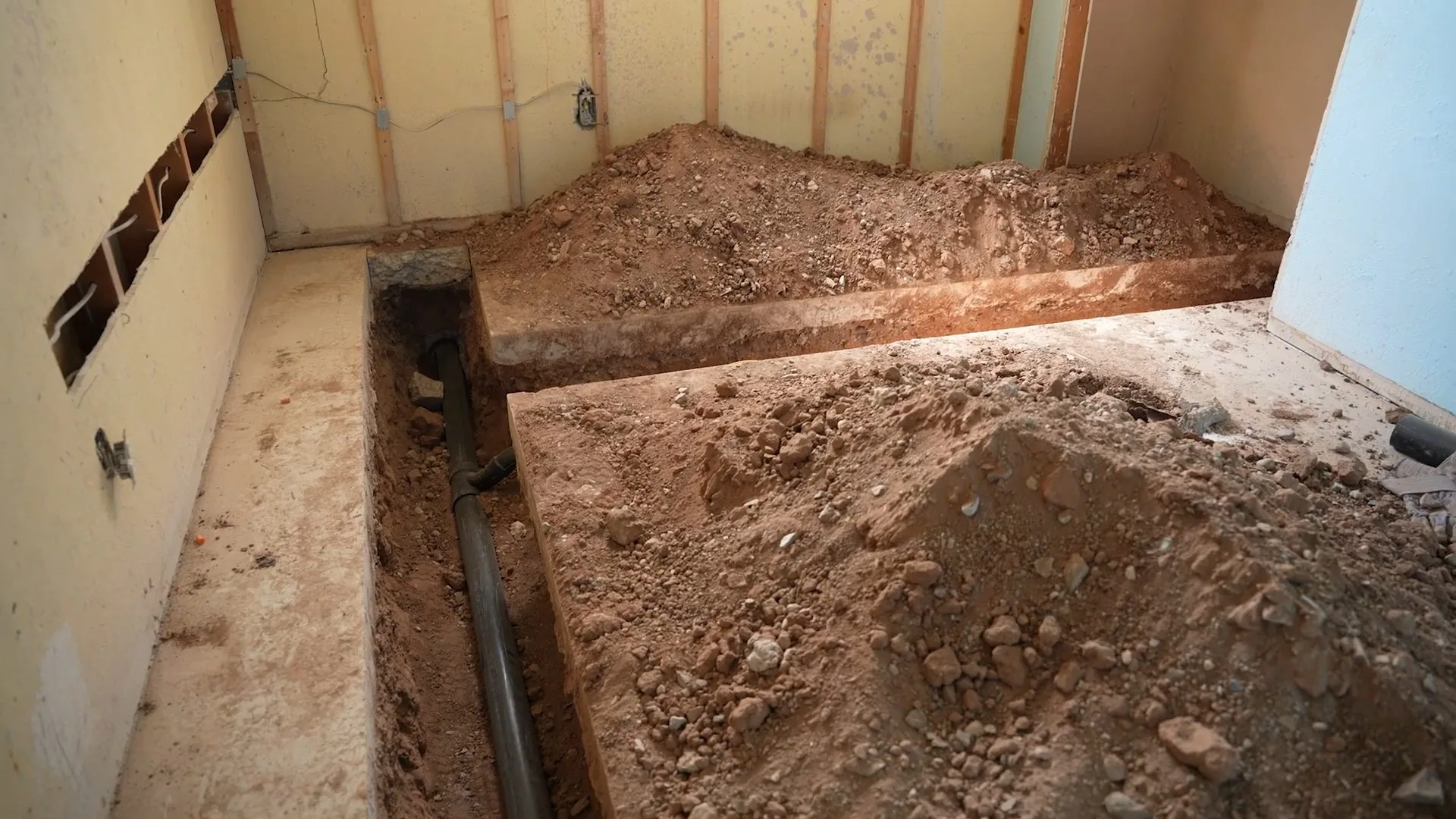
A warm floor spot or running water with every tap off
Slab leaks are hard to see because the pipe is under concrete. The home tells on itself instead. These are the signs people report first.
- A warm patch on the floor, most often from a hot-water line
- The sound of water running when nothing is on
- A water bill that climbed with no change in use
- Damp or discolored flooring, lifting tile or musty carpet
- A meter that keeps moving with the main shutoff closed in the house
None of these proves a leak under the slab. A leaking line in a wall or a running toilet can look the same. The point is to confirm before anyone starts cutting concrete.
First question: is your home on a slab at all?
Homes in this area can sit on a slab, over a crawl space or on a basement. The answer changes which page you need. A leak in a crawl space or basement is reachable from below, so most of this page does not apply. A slab leak is not reachable without breaking concrete or running a new line another way.
If you are not sure, look at how the floor meets the ground, or check the property record. If you rent, ask the landlord. For a house with a basement or crawl space, start with confirming a leak first instead.
Foundation cracks and slab leaks are not the same problem
A crack in a slab does not mean a pipe has burst. The Kentucky Geological Survey describes Hardin County as karst terrain, with limestone that can subside and ground that can settle over soft clay. Settling can crack a slab on its own, and it can also stress a line.
That is why a plumber should confirm water loss before blaming the foundation, and a foundation specialist should confirm movement before blaming the pipe. Ask the plumber to document the leak with a pressure test and a location. If cracks are widening or doors and windows are sticking, tell them and see a structural professional as well.
Three ways to fix a leak under a slab
The repair is a trade-off between how much you want opened up and how long the new line has to last. Ask the plumber to explain all three and why one fits your leak.
| Method | What happens | What you give up |
|---|---|---|
| Spot repair | The slab is opened over the leak and the pipe is repaired | A cut in the floor, flooring removal and the risk of more leaks in the same line |
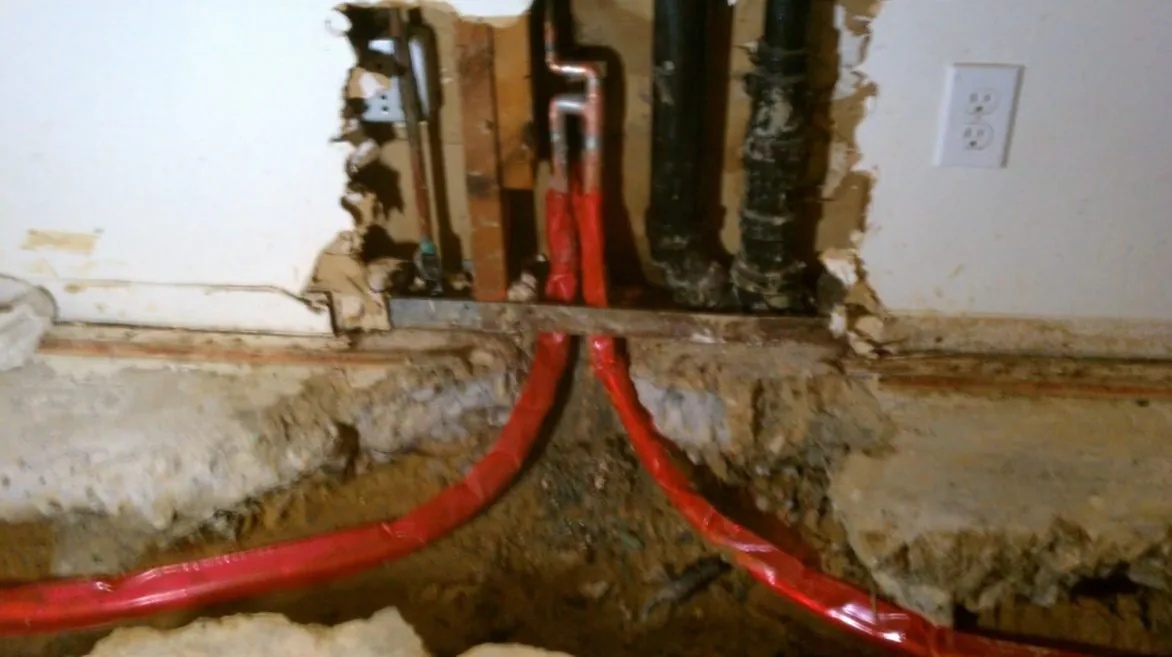
| Reroute overhead | The leaking line is capped and a new line runs through the attic or walls | Some wall and ceiling openings, and a new line to maintain |
| Replace the line | The failing line is replaced from end to end | The most disruption, with the longest-lasting result |
Rerouting is often discussed as a trenchless approach because the slab stays intact. It still needs openings elsewhere in the house, and relining a sewer line for sewer lines is a different process, so do not mix the two up when comparing quotes.
Warm spot on the floor?
Call and say where it is and whether the home sits on a slab.
Soil, slab age and why some slabs leak more than others
Several things stress a pipe under concrete: ground movement, corrosive soil and water, a line that was bent or rubbed during construction, and age. Local conditions vary house to house, so no single cause fits every slab in Elizabethtown.
The Kentucky Geological Survey's Hardin County page describes sinkholes, underground channels and settling over soft clay. That is a reason to ask whether ground movement could have damaged the line, not a claim that it did. Caliche soil and post-tension slabs come up in other markets. Nothing in the research for this city points to them, so a plumber who raises them for your house should explain why.
Permits, inspection and who to call before work under a slab
Elizabethtown Planning and Development, at City Hall on West Dixie Avenue, reviews and inspects most construction under the state codes. Its page lists plumbing inspectors at the Hardin County Health Department, 270-769-3071. Before a repair that opens the slab or reroutes a line, call that number and ask who issues the permit for your address.
Radcliff and Vine Grove have their own local building inspectors, according to a Kentucky state contact list last updated in 2020. If you live outside the city limits, ask the office for your own jurisdiction.
Insurance and a slab leak
Many policies treat the leak itself differently from the damage it causes, and the tear-out to reach the pipe is the part owners most often ask about. Whether yours covers any of it depends on the policy.
- Call the insurer before demolition, not after.
- Keep the plumber's written report, with the pressure test and the leak location.
- Photograph the floor, the wet areas and any removed material.
- Ask in writing what the policy covers: the pipe, the access, the damage or none of the above.
Questions to settle before anyone cuts concrete
Concrete work cannot be undone. Take a few minutes to get answers first.
- Which line is leaking, and how was it confirmed?
- Why this repair method over the other two?
- How will the floor be left, and who finishes it?
- Will the plumber check the other lines in the slab?
- Who is pulling the permit, and will there be an inspection?
This page covers homes. Commercial slabs involve different codes and equipment, so mention it if your property is not residential. If water is already on the floor, shut off the main and read the steps on the burst pipe repair page while you wait.
Call with what you know
Tell us what the floor and the meter are doing
Say where the warm spot is, what the meter did with the main closed, and whether the home sits on a slab.